What Is Pop Traffic? Popunder, Popup and Clickunder Explained
Pop traffic opens the ad in a separate tab: popunder, clickunder, popup and direct click, sold on CPM and bought for volume rather than precision. It is the cheapest way to reach a lot of people fast, and it only forgives offers a stranger can act on in one screen. Here is how the formats differ, what it costs by GEO, and which verticals convert.
Pop traffic is advertising that opens in a separate browser tab or window instead of sitting inside the page. It covers four related formats — popunder, clickunder, popup and direct click — which ad networks usually sell as one category because they are bought the same way: cheap, in volume, and priced per thousand impressions rather than per placement.
That makes pop the entry point into paid traffic for most media buyers, and also the format that punishes carelessness fastest. Below: how the four formats differ, what the traffic actually costs by GEO, which offers survive it, and how to set a campaign up so the budget goes into leads rather than into junk zones.
Popunder, clickunder, popup and direct click: what is the difference
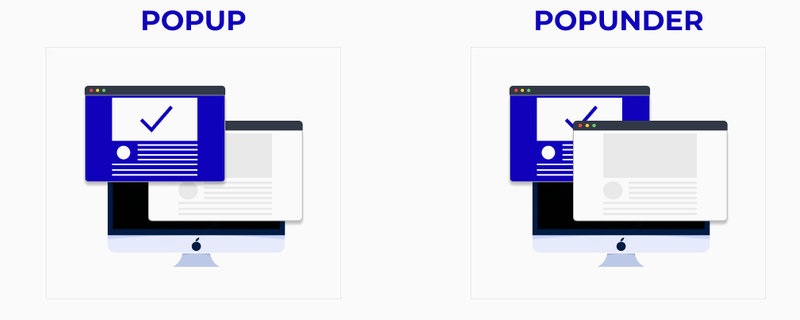
All four put the ad in its own tab or window. What changes is when the user sees it, and that single difference decides which offers work.
| Format | How it opens | Best for |
|---|---|---|
| Popunder | New tab behind the active window; seen when the user switches | Volume buying, offers that survive a delayed first look |
| Clickunder | Same as popunder, triggered by a click on the page | Sites where clicks are frequent — streaming, file hosting |
| Popup | New window on top of the content, immediately visible | Short-decision offers where instant attention matters |
| Direct click | Current tab is replaced by the offer page | Simple flows with one action and no comparison step |
A worked example: a visitor opens a streaming site and clicks “watch online”. A popunder loads the offer in a background tab — the visitor finishes what they came for and meets the ad afterwards. A popup puts the offer in front of them right away, interrupting the click they just made. Same inventory, different state of mind, and often a different conversion rate on the same offer.
Where pop traffic comes from
Pop inventory is generated by sites where visitors click a lot and tolerate interruption in exchange for free access: streaming and file hosting, torrent trackers, sports and match-result sites, browser games, utility and converter tools. That origin explains both the price and the risk.
- Volume is enormous because a single visit can produce several pop impressions across a session.
- Intent is low — nobody arrived looking for your offer, so the creative and the landing page carry the whole persuasion job.
- Quality varies by zone, not by GEO — two placements in the same country can differ several times over in conversion rate, which is why zone-level reporting matters more here than in any other format.
What pop traffic costs
Pop is priced on CPM, and the recommended bid is what it takes to win a meaningful share of the auction rather than a floor price. Figures below come from the Youtarget traffic showcase on 30 July 2026 and shift with demand — treat them as an order of magnitude, not a rate card.
| GEO | Available impressions | Recommended CPM |
|---|---|---|
| India | 593 M | $0.17 |
| Indonesia | 302 M | $0.73 |
| United States | 135 M | $1.63 |
| Egypt | 109 M | $0.49 |
| Japan | 75 M | $1.06 |
| Philippines | 69 M | $0.59 |
| Brazil | 54 M | $0.40 |
| Germany | 43 M | $1.30 |
| United Kingdom | 38 M | $1.68 |
The pattern is the one to plan around: Tier-3 volume is close to free but converts on simple, low-ticket offers, while Tier-1 costs roughly ten times more per thousand impressions and only pays back when the offer value is high enough to absorb it. India at $0.17 and the United States at $1.63 are not the same business — they are two different funnels that happen to share a format.
Live volumes for every GEO and every format are published on the available traffic page.
Which verticals convert on pop traffic
Pop rewards offers a stranger can grasp in one screen and act on immediately. Anything that needs comparison, trust-building or a long form belongs to another format.
- Gambling and betting — casinos, sportsbooks and lotteries, the largest single consumer of pop volume.
- Sweepstakes — the prize does the persuading, which is exactly what low-intent traffic needs.
- Entertainment — streaming, IPTV and games, where the audience and the inventory overlap.
- Utilities and VPN — one obvious benefit, one button, no explanation required.
- Finance — microloans and credit offers work, investment products with long consideration cycles do not.
- Nutra — viable with a pre-lander that does the warming the traffic never got.
Mobile and desktop pop traffic
Pop inventory is overwhelmingly mobile. On the same showcase, mobile accounts for about 95% of available pop impressions in India and Indonesia, 90% in Egypt and 74% in the United States — so a campaign left on default targeting is, in practice, a mobile campaign whether you planned it that way or not.
The two behave differently enough to justify separate campaigns. On mobile the new tab competes with a small screen and an impatient user: the page has to render in about a second, and anything that needs typing loses. Desktop tolerates a longer page and a form, and carries higher-value offers, but the volume is smaller and the price higher.
Splitting mobile and desktop into separate campaigns rather than one campaign with mixed targeting is what makes the numbers readable — otherwise a profitable desktop segment hides a loss-making mobile one, or the reverse.
How to buy pop traffic without burning the budget
Start narrow, then widen
One GEO, one device type, one offer. A campaign that mixes five countries and both device types produces an average that tells you nothing about any of them.
Set a frequency cap from the start
Pop inventory will happily show the same person the same offer several times a day. One impression per user per 24 hours is a reasonable opening position: it protects conversion rate and keeps the spend on new users.
Judge zones, not campaigns
The decision that matters in pop is which placements to keep. Read performance per zone, cut what does not convert after enough impressions to be meaningful, and raise bids where it does. Microbidding and automatic rules exist for exactly this — the work is too repetitive to do by hand at pop volumes.
Test the landing page before blaming the traffic
Low-intent traffic exposes a slow or unconvincing landing page immediately. Before writing off a source, check load time on a mid-range mobile device and whether the first screen states the offer without scrolling.
Filter for quality, not just price
The cheapest pop traffic is cheap for a reason. Anti-fraud filters, traffic-quality classes and blocklists are what separate low price from low value; without them the saving on CPM comes straight out of conversion rate.
Is pop traffic still worth it?
Pop has been declared dead for a decade and keeps outliving the obituaries, because the economics stay the same: it is the cheapest way to put an offer in front of a large number of people quickly. What changed is the tolerance for sloppiness — publishers police intrusive placements harder, advertisers pay for player quality rather than raw volume, and the gap between a campaign with zone-level optimisation and one without has widened.
If you are choosing between formats, the practical comparison is with push and native: see how to combine push, pop and native. For the history of how the format cleaned up its reputation, see popunder evolution. And for where to buy it, the top popunder ad networks covers the current options.
Frequently asked questions
What is pop traffic?
Pop traffic is advertising that opens in a separate browser tab or window rather than inside the page. It covers popunder, clickunder, popup and direct click, sold on CPM and bought for volume rather than precision.
What is the difference between popunder and popup traffic?
A popunder opens behind the active window, so the visitor meets the offer after finishing what they were doing. A popup opens on top of the content and is seen immediately. Popunder suits volume buying, popup suits offers that need instant attention.
How much does pop traffic cost?
Pop is priced per thousand impressions and varies about tenfold by GEO. On the Youtarget showcase in July 2026 the recommended CPM ran from roughly $0.17 in India and $0.40 in Brazil to $1.63 in the United States and $1.68 in the United Kingdom.
Which offers work on pop traffic?
Offers a stranger can understand in one screen and act on at once: gambling and betting, sweepstakes, entertainment subscriptions, utilities and VPN, microloans. Anything requiring comparison, trust or a long form performs better on other formats.